
A City of Performance
Felix AustriaThis flow follows the public spectacles that shape how the characters understand reality, from piano concerts and optical devices to Thorn’s magic and Felix’s performance history.
increasing Bearing strength in each event
 decreasing
Bearing strength in each eventdecreasingThe Child Prodigy
Music as a Public Wonder
Koczalski performs
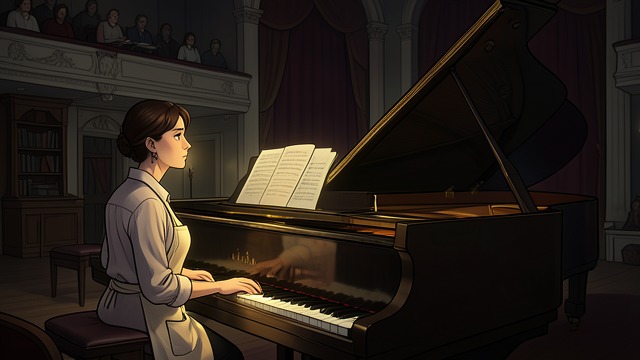
Adèle takes Stefania to hear Raoul Koczalski, whose skill on the piano overwhelms the narrator. Stefania compares the instrument’s command to her own ordinary competence in the kitchen.
Art intensifies self-consciousness
The concert gives Stefania a moment of awe and shame about her smallness. Public performance becomes a measure against which she judges her own unrecognized talents.
The Photoplasticum
Seeing Distant Places
A mechanical window
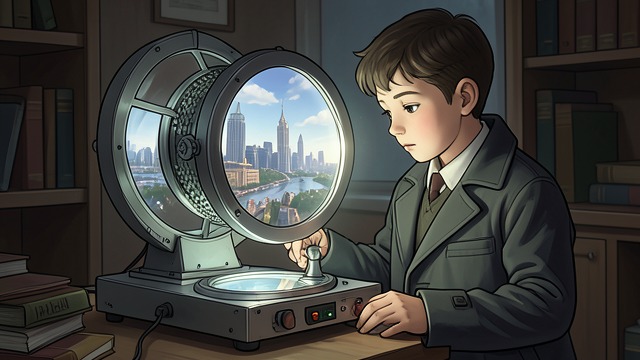
Stefania takes Felix to a photoplasticum, where he studies images of southern European cities and refuses to leave. The device presents distant places through a rotating optical mechanism.
Technology becomes desire
Felix’s absorption reveals his intense curiosity and longing for systems he can inspect. The spectacle is not merely entertainment; it becomes another way he gathers and orders the world.
The Theatre’s Illusions
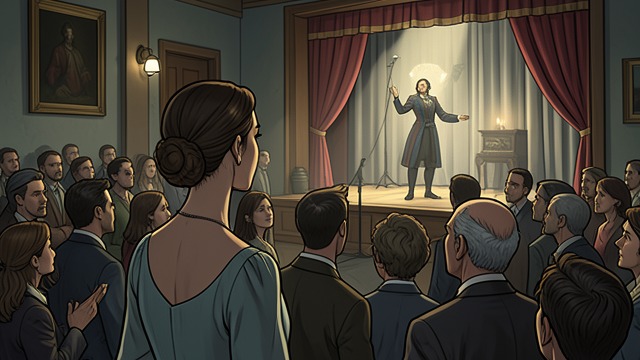
Thorn Commands the Audience
A sequence of marvels
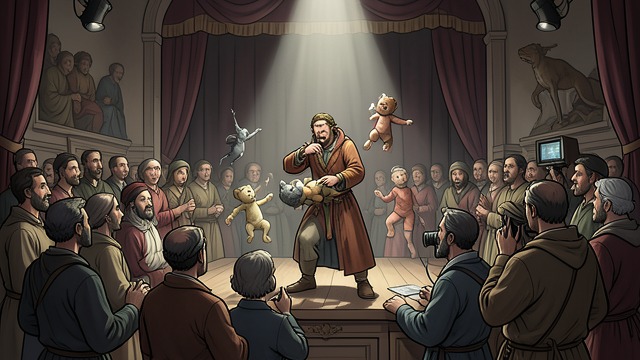
Thorn’s show turns stuffed figures into performers and presents apparent transformations of age and body. The audience responds with wonder, fear, and physical distress.
Limits of explanation
Stefania tries to identify the tricks but cannot explain every image. The performance establishes Thorn’s power to manipulate attention without proving that the supernatural is real.
Felix’s Camera Studies
Learning to Make Images
Photography in the darkroom
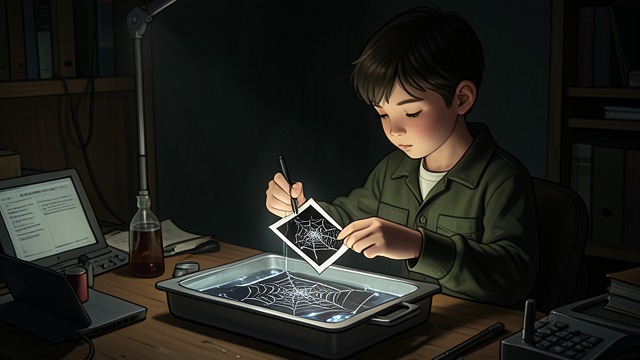
Petro takes Felix to a chemist’s darkroom, where the boy learns to develop photographs. His images record bark, fine hair, spiders’ webs, and electric lamps.
A different kind of spectacle
Felix finds beauty in technical detail rather than in a staged performance. His photographs show a mind attentive to the hidden structures of ordinary objects.
A World of Watching
Spectacle Turns Inward
Performers and observers
Thorn’s tricks, Felix’s drawings, and the crowd’s interpretations all depend on what people notice and what they overlook. Stefania comes to see herself as both performer and audience.
Reality remains contested
The novel does not simply dismiss wonder as deception. It shows how art, technology, and desire produce different forms of seeing, each capable of revealing something and concealing something else.
Winter 1899–1900
Around 1900, during Felix’s early months
New Year’s Eve 1899
Late summer 1900
Near the novel’s ending
